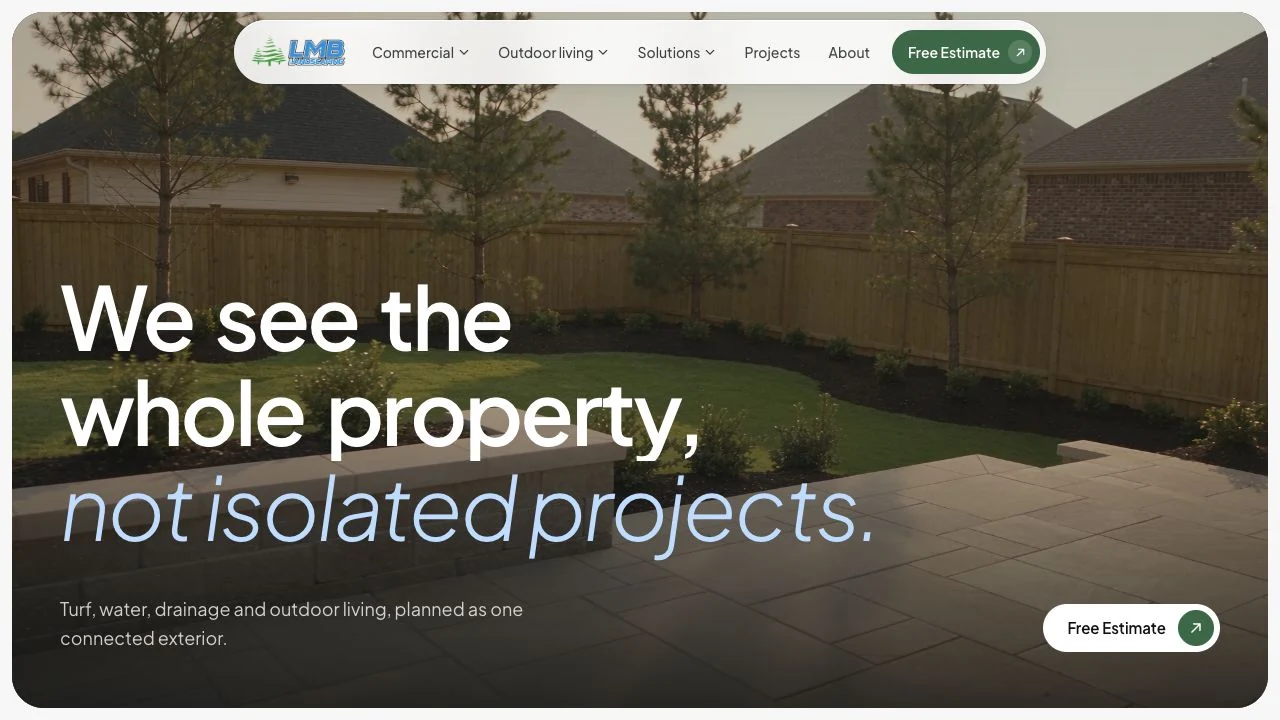
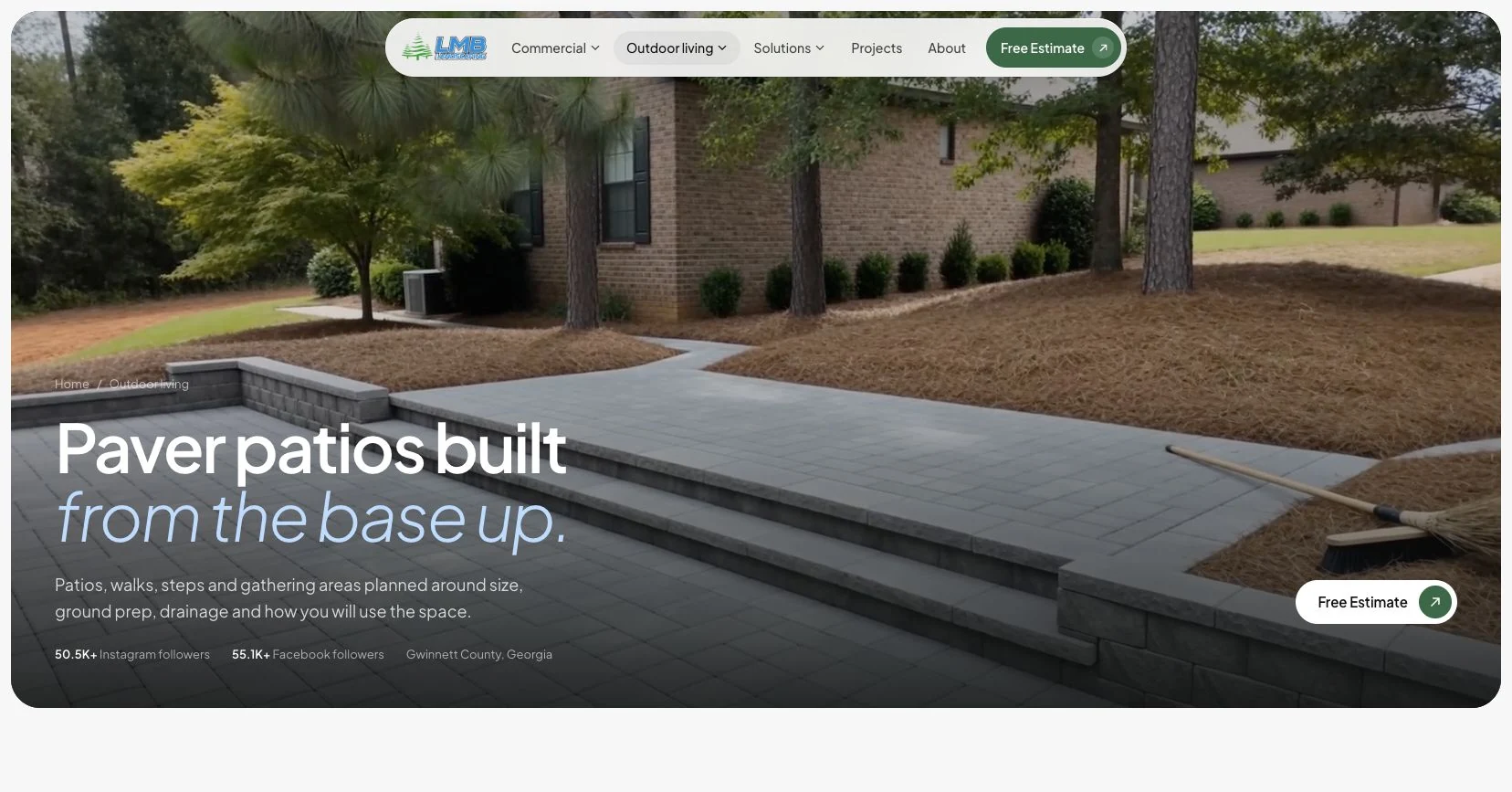
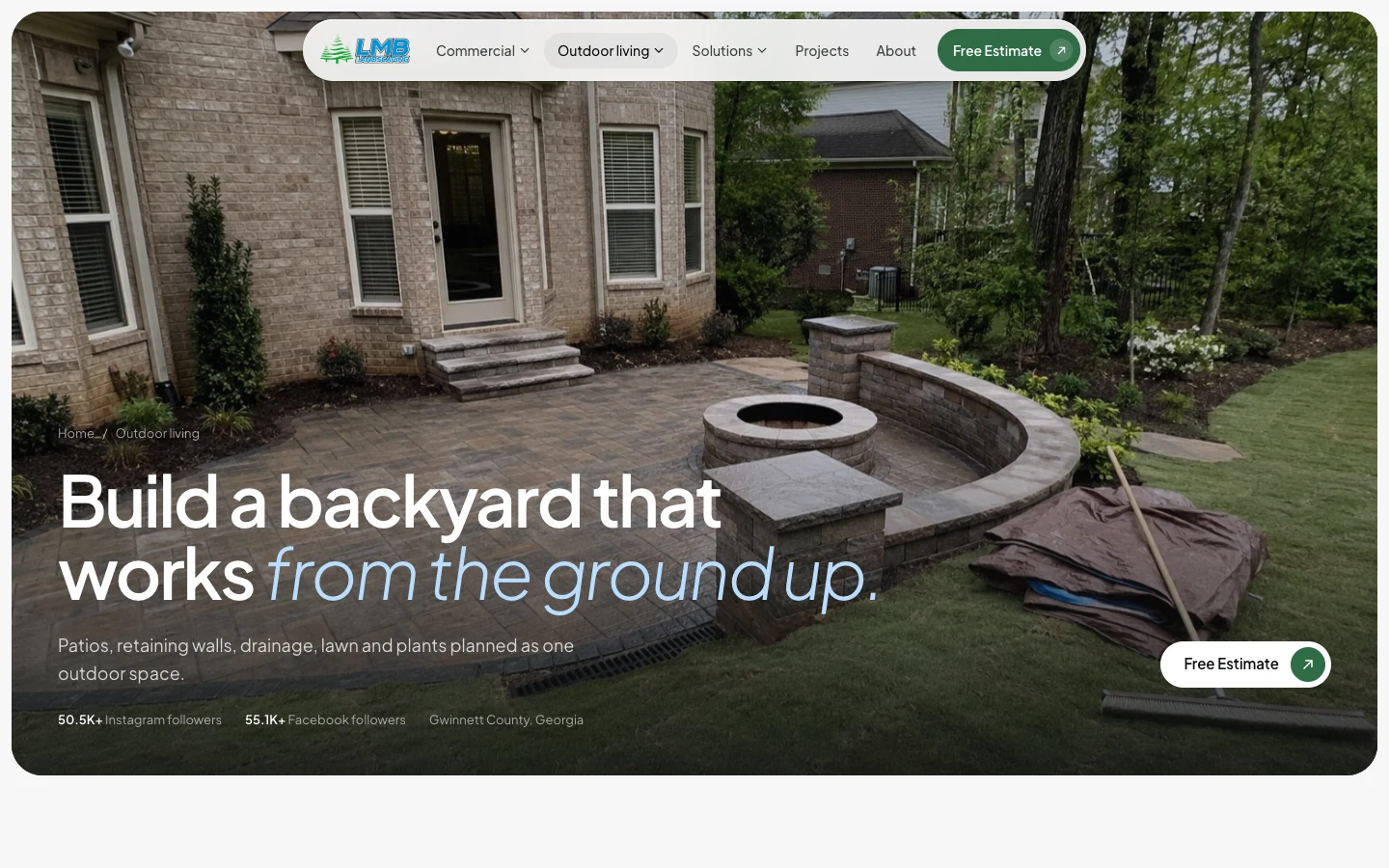
LMB’s website introduces the whole property, then gives outdoor living a dedicated route into more specific services.
02
A problem to solve
Drainage, access or a difficult yard.
“What does this part of my yard need?”
Help someone describe the problem before choosing a solution. The website should explain the relevant services; your qualified team can assess the property.
Your website build is included with our ongoing SEO, Google Business Profile and AI-search program.
Actual website work / LMB Landscaping
Landscape solutions have their own place within LMB’s website, alongside outdoor living and commercial work.
03
A commercial property
Different scope. Different responsibilities.
“Can you support the needs of this property?”
Separate the commercial conversation from a residential inspiration gallery. Make the offered work clear and gather the property context your team needs.
A patio visitor may be thinking about eating outside. Another wants an easier route through the yard. Start with those uses, then explain the services and decisions involved. Keep installation work distinct from recurring maintenance so people can recognize the right offering.
The LMB Landscaping website uses a whole-property perspective, with clear routes for outdoor living, landscape solutions and commercial work. The homepage introduces the connected property before visitors explore the individual services and consultation path.
02
Make project imagery informative.
A wide finished view establishes the setting. Closer footage can explain transitions, material choices and how the space is used. Pair them with a short project account: the original need, the agreed scope and a detail the team considered carefully.
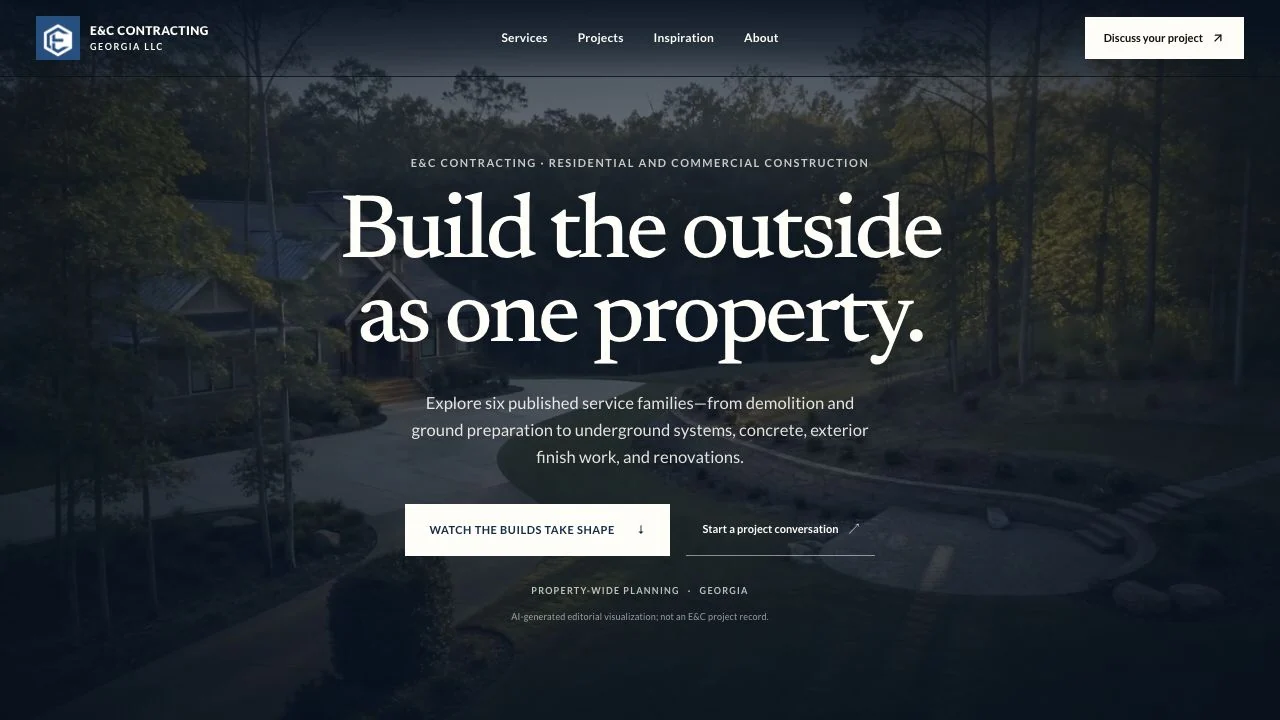
When showing a design concept or generated visualization, say so beside the image. Customers should be able to distinguish an idea from a completed project. Real progress footage and honest explanations can still give a young portfolio substance.
Capture the space from repeatable viewpoints.
Show connections between parts of the property.
Ask the team to explain one practical choice.
03
Plan content around the work that is available.
A shoot does not need to depend entirely on one finished reveal. An in-progress installation, a material comparison and a team explanation can each answer a different question. Propel Media plans capture and editing around the jobs and access you actually have.
Use those pieces across a proposed month of social content, then select the strongest service-specific material for Meta ads. Schedule the campaign around your ability to quote and deliver the work. More inquiries are only useful when the operation can respond.
04
Qualify the project without making the form a chore.
Start with location, the intended use of the space and whether the customer needs design, installation or help defining the scope. Ask for existing photos as an optional next step. Route commercial requests separately when their decision process needs different information.
For a business serving Buford, local content should describe its actual coverage and relevant services. One detailed, truthful page is more useful to a visitor than a collection of town names with the same vague copy.
Usually begin with a clear project type and its buyer. The website can connect related services once the visitor understands the first offer.
Propel Profits
Working with Propel02 / 03
What if we have more progress photos than finished work?
Use them with context. Explain the stage shown and the question it answers; do not present an unfinished or illustrated scene as a completed installation.
Propel Profits
Content & production03 / 03
Can search and on-location content work together?
Yes. A useful project story can support a service page, social content and a conversation with a prospective customer. We plan each format around its purpose.
Propel Profits
Connect the right work.
Explore the services that support this customer journey.